RESPECTfarms develops new business model for beef farmers

Not so long ago, a world where most meat doesn’t come from slaughtered animals seemed as remote as a flight to Mars. But now, cultivated meat production is the focus of a vast range of initiatives researching viable options for upscaling. RESPECTfarms sees the potential of this new technology, albeit on a small scale, to reimagine beef farmers’ business models. The Rabo Impact Fund is supporting RESPECTfarms with 25,000 euros in funding.


Cultivated meat is produced by taking stem cells from an animal and growing them in an artificial environment like a bioreactor. The cells are fed with water, sugar, and proteins until they grow into a final meat product. When Ralf Becks first encountered the technology a few years ago, he immediately saw its potential. “It lets you produce meat at a lower cost and carbon footprint than conventional meat, which requires a herd of cattle plus lots of land, water, and feed. And being an artificial process, meat cultivation also produces zero manure pollution.”


Bringing farmers to the table

“This technology has caught the attention of major players, but they’re excluding the very people for whom this could provide a new, healthy business model. I’m talking about beef farmers, who’ve been struggling for years. Our new business model lets them join the protein transition by switching to cultivated meat. They’d only need to keep a few cows from which to harvest stem cells, and they’d earn more on their meat by growing it at a lower cost in a bioreactor.”


Finding a bioreactor

To develop his plans, Ralf contacted an expert in cultivated meat, a poultry farmer, and a researcher. Together, they set up the RESPECTfarms partnership to promote cultivated meat technologies in livestock farming. The next big step in the partnership is setting up a test farm. “We’re currently looking for an energy-efficient bioreactor the size of a cow. It needs to be that big to produce as much meat as a real cow,” explains Ralf.


All you need is already there

RESPECTfarms doesn’t want to install a massive bioreactor and cultivate tons upon tons of meat. Instead, their vision is for a ‘herd’ of smaller bioreactors that produces meat throughout the year. “Just like real, living cows. Another thing about this set-up is that it allows farmers to leverage their current assets, such as capable people, sales channels, feed, and solar panels as a renewable energy source.”


Find and work with supporters

RESPECTfarms aims to open the first test farm in 2025, starting with one bioreactor and scaling up from there. Though hopeful, Ralf is aware of people’s misgivings about cultivated meat. “We surveyed whether farmers are interested in our concept – 90% think it’s a ludicrous idea. That’s often the first reaction to innovations, though. When that happens, it’s wise to show people respect and take their feedback seriously. Better still, try working with the 10% who are open to the idea.”


A helping hand in development

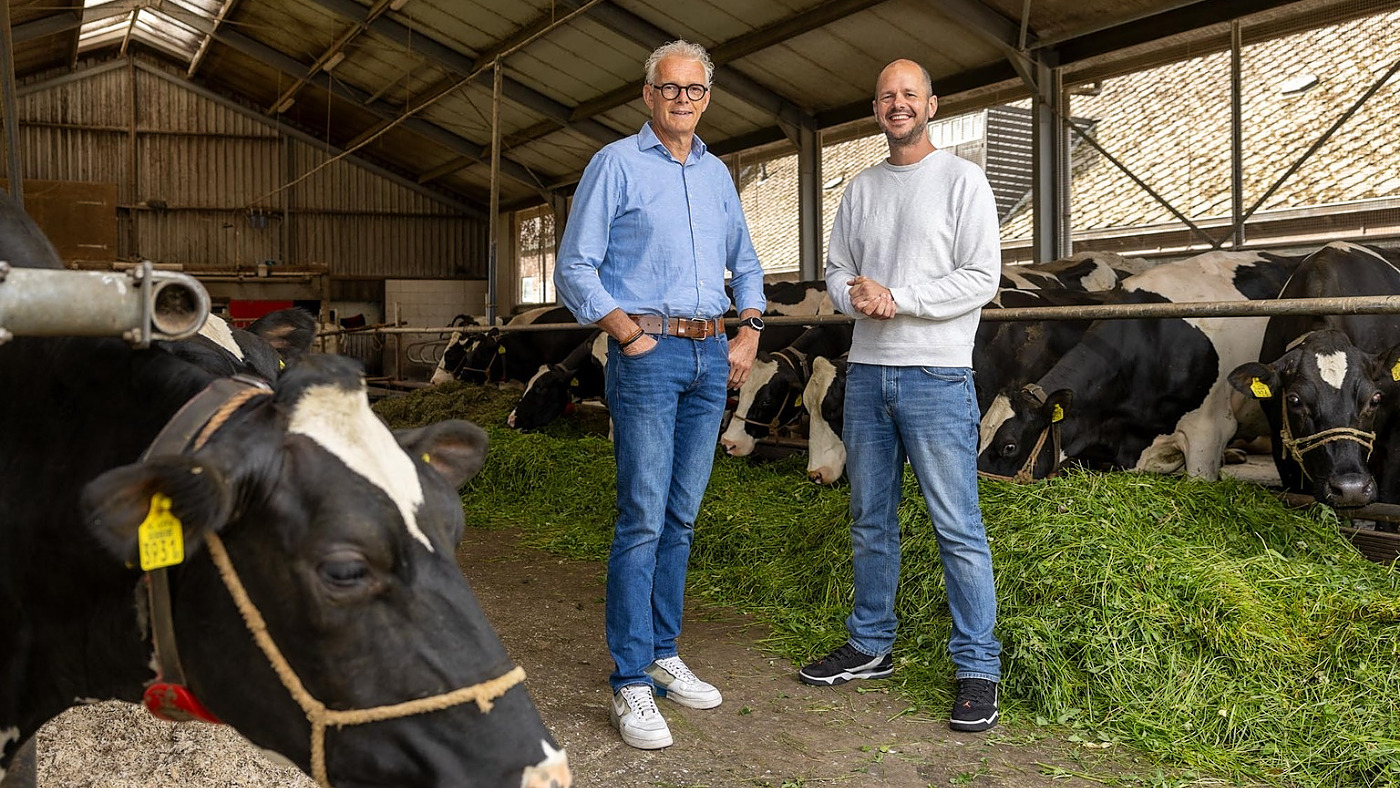
The test farm’s first bioreactor is being developed with support from the Rabo Impact Fund. Playing a part in evaluating the application was Carlo Verhart, a member of the fund’s advisory board and program manager of ‘Voedsel Verbindt,’ a foundation promoting a sustainable, regional, and circular food system in North Holland and Flevoland. “The Rabo Impact Fund supports high-potential, innovative initiatives that don’t quite have the revenue to qualify for business loans. We help them by providing them with the money they need to grow.”


A dream for beef farmers

RESPECTfarms’ idea has made an impression on Carlo. “There are hundreds of initiatives developing large-scale cultivated meat, but not one brings in the farmers. That’s how RESPECTfarms differs. It puts the farmer in the loop.” RESPECTfarms is thrilled with the donation. “It’s great to have someone believe in what you’re doing at this early stage. The funds will be key to our further growth. Our vision is to help thousands of beef farmers across the globe complete their protein transition from slaughtered to cell-based meat, produced by herds of bioreactors. That’s our dream,” says Ralf.